By: Mishelle Becker, QKA
Compliance & Document Coordinator
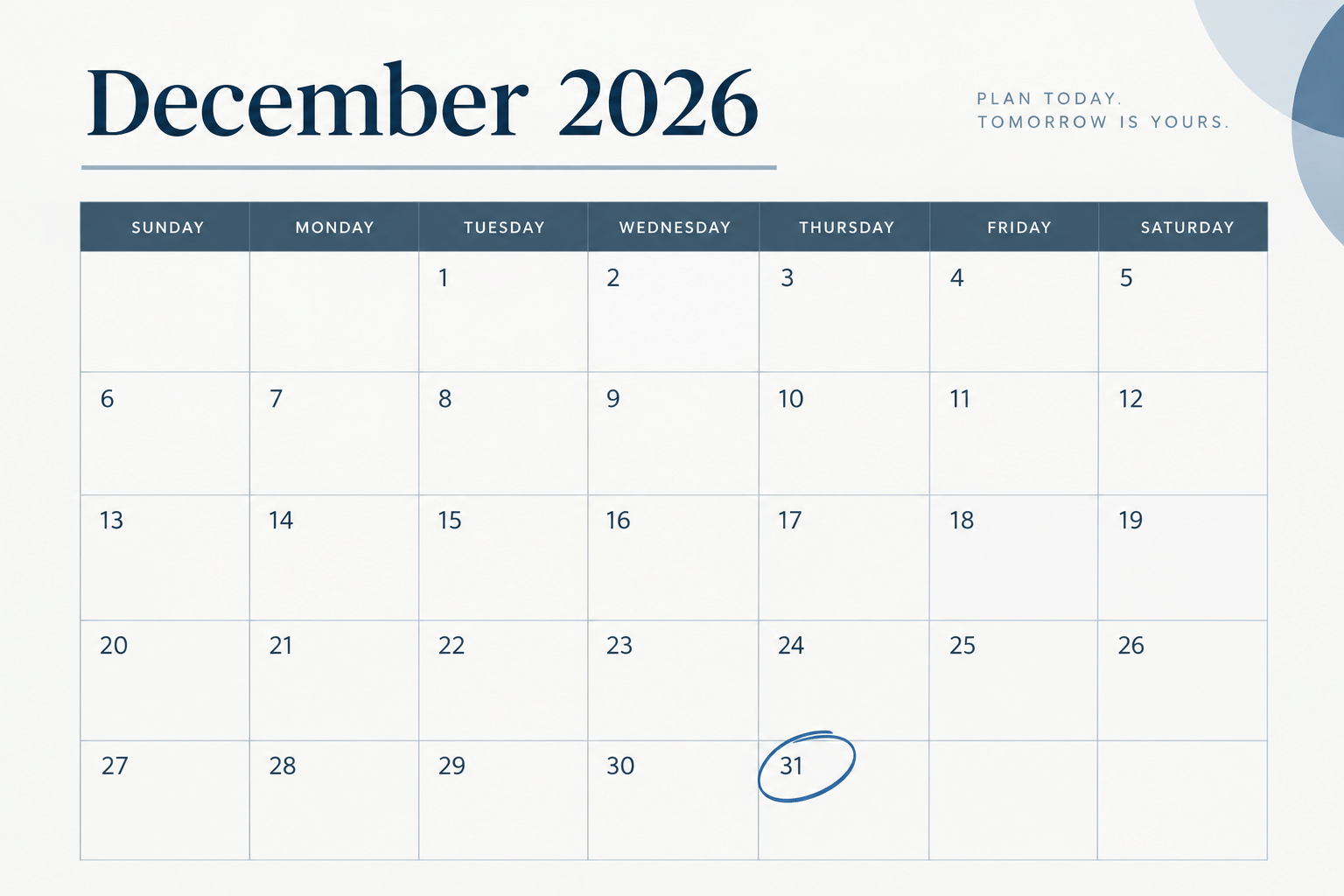
For most qualified retirement plans, including 401(k), 403(b), and profit-sharing plans, the SECURE 2.0 amendment deadline is December 31, 2026. By that date, employers must update their written plan documents to reflect the changes they’ve already been making to comply with the SECURE 2.0 Act of 2022.
What Is the SECURE 2.0 Amendment?
The SECURE 2.0 Act of 2022 made sweeping changes to retirement plan rules. Many of those changes took effect over the last few years, and plan sponsors have been required to follow them in day-to-day plan operations.
What hadn’t been required yet was the paperwork. The IRS gave plan sponsors extra time to update their written plan documents.
Think of it like a house rulebook. You’ve been living by new rules for three years. Now it’s time to update the written version so it matches what you’ve actually been doing.
Your plan’s amendment will typically cover two kinds of changes:
- Required amendments reflect the mandatory provisions of SECURE 2.0 that apply to your plan.
- Discretionary amendments reflect optional features you’ve chosen to add.
Why the SECURE 2.0 Amendment Deadline Matters
To protect the plan’s tax-qualified status, a retirement plan must operate according to its written plan document. When the document and day-to-day operations don’t match, the plan can have a compliance problem.
Missing the SECURE 2.0 amendment deadline can put your plan’s tax-qualified status at risk. Fixing a missed amendment after the fact typically means going through the IRS Employee Plans Compliance Resolution System (EPCRS), which can involve fees and additional work.
As the plan sponsor, you remain responsible for making sure the amendment is reviewed, signed, and kept with your plan records. Your Third-Party Administrator (TPA) or document provider can prepare the amendment and guide you through your choices, but the final decisions are yours. For complex plan design questions, you may also want to involve your legal counsel.
SECURE 2.0 Amendment Deadline by Plan Type
The IRS sets different deadlines depending on the type of retirement plan you sponsor. For most private employers, the 2026 SECURE 2.0 amendment deadline will apply. It’s a fixed date for both calendar year plans and non-calendar year plans, and it applies to pre-approved and individually designed plans alike.
| Plan Type | Amendment Deadline |
|---|---|
| Most 401(k), 403(b), and profit-sharing plans | December 31, 2026 |
| SIMPLE IRAs and SEPs | December 31, 2027 |
| Collectively bargained (union) plans | December 31, 2028 |
| Governmental plans, including public school plans | December 31, 2029 |
The SIMPLE IRA and SEP deadline was recently moved from 2026 to 2027 by IRS Notice 2026-9, because the IRS is still developing model amendment language for these plans.
SECURE 2.0 builds on the original SECURE Act, which became law in 2019. Plan documents need to reflect both laws, and the IRS set the same December 31, 2026 deadline for each. Your TPA or document provider will likely be able to handle both updates at once.
Mandatory SECURE 2.0 Provisions
The key provisions below must be included in your amendment if they apply to your plan type. There’s no option to opt out.
Higher Required Minimum Distribution (RMD) Age
A Required Minimum Distribution (RMD) is the amount a participant must start withdrawing from their account each year once they reach a certain age. SECURE 2.0 raised that starting age:
- Age 73 for participants born from 1951 through 1959
- Age 75 for participants born in 1960 or later
Roth Catch-Up Contributions for Higher Earners
Participants age 50 and older can make extra catch-up contributions. Under final regulations issued in 2025, higher-income participants whose prior-year FICA wages from your company exceeded $150,000 (indexed for inflation) must make their catch-up contributions as Roth (after-tax) contributions starting in 2026.
This rule only matters if your plan offers catch-up contributions. If your plan doesn’t offer a Roth option, these higher earners won’t be able to make catch-up contributions at all. That’s worth a conversation with your TPA.
Long-Term, Part-Time (LTPT) Employees
Employees who work between 500 and 999 hours in each of two consecutive years must be allowed to make salary deferrals into the plan. This applies to 401(k) plans and to 403(b) plans covered by ERISA.
Tracking hours accurately is key here, so this provision often depends on close coordination with your payroll provider.
Mandatory Automatic Enrollment for New Plans
If your 401(k) or 403(b) plan was established after December 29, 2022, it generally must meet the automatic enrollment requirements for plan years beginning after December 31, 2024. That means:
- New employees are enrolled at a contribution rate between 3% and 10%
- The rate increases by 1% each year until it reaches at least 10% (and no more than 15%)
- Employees can always change their rate or opt out
Some plans are exempt, including:
- Plans established on or before December 29, 2022
- Businesses with 10 or fewer employees
- Businesses that have existed for less than three years
- Church plans and governmental plans
SECURE 2.0 Optional Provisions
SECURE 2.0 optional provisions are discretionary plan changes you can choose to add to your plan. They’re designed to help with recruiting, retention, and employee financial wellness.
Before adding any of them, keep two things in mind:
- Some features can be hard to remove later. Certain plan features become protected benefits once they’re in your plan.
- Most features add administrative work. Many require tracking, payroll coding, or recordkeeper support.
We’ve grouped the SECURE 2.0 optional provisions into three categories to make them easier to review: contribution features, withdrawal flexibility, and administrative relief.
Contribution Features
| Provision | What It Does | Things to Consider |
|---|---|---|
| Student loan matching | Lets you make matching contributions based on an employee’s qualified student loan payments. | Requires a process for employees to certify payments. |
| Employer Roth contributions | Lets you permit participants to receive matching contributions or nonelective contributions as Roth contributions. | Contributions are taxable to the employee in the year made and require payroll and recordkeeper support |
| Higher catch-up for ages 60 to 63 | Allows a larger catch-up contribution of $11,250 in 2026 (vs. $8,000 for ages 50 and older). | The higher limit ends the year a participant turns 64. |
| Pension-Linked Emergency Savings Accounts (PLESAs) | Creates a Roth-only emergency savings account for non-highly compensated employees, capped at $2,500 (indexed). | Withdrawals must be allowed at least monthly; adds setup and tracking work. |
Withdrawal Flexibility
| Provision | What It Does | Things to Consider |
|---|---|---|
| Emergency expense distributions | Allows one penalty-free withdrawal of up to $1,000 per year for personal or family emergency expenses. | If not repaid, the participant generally can’t take another for three years. |
| Domestic abuse victim distributions | Allows penalty-free withdrawals of the lesser of $10,000 (indexed) or 50% of the vested balance. | Participants self-certify eligibility. |
| Terminal illness distributions | Removes the 10% early withdrawal penalty for participants with a physician-certified terminal illness. | The plan generally must already offer an in-service or hardship distribution. |
| Qualified Disaster Recovery Distributions (QDRDs) | Allows penalty-free withdrawals of up to $22,000 per federally declared disaster. | Can be repaid within three years. |
| Qualified Birth or Adoption Distributions (QBADs) | Allows penalty-free withdrawals of up to $5,000 per child within one year of a birth or adoption. | Available since 2020; SECURE 2.0 limits repayment to three years. |
Administrative Relief
| Provision | What It Does | Things to Consider |
|---|---|---|
| Higher involuntary cash-out limit | Raises the threshold for cashing out small former-employee balances from $5,000 to $7,000. | Helps reduce the number of small, inactive accounts. |
| Simplified notices to unenrolled employees | Replaces most annual notices to eligible non-participants with one annual reminder. | Applies only to employees with no account balance. |
| Hardship self-certification | Lets participants self-certify hardship eligibility instead of providing documentation. | The Plan Administrator should adopt a consistent written policy. |
| Top-heavy testing relief | Lets you exclude employees who haven’t met age and service requirements when providing top-heavy minimum contributions. | Can reduce employer contribution costs in some plans. |
Advisors can use this list to guide plan design conversations. Plan sponsors and HR teams can flag features that fit their workforce, then talk with their TPA about the added administrative work.
How to Prepare for the SECURE 2.0 Amendment Deadline
With the 2026 deadline approaching, here are the practical steps to take now.
- Review how your plan has actually operated. Look at payroll files and plan records from the past few years. Your amendment must match what really happened, not just what you intended. This review, often called a gap analysis, helps you confirm operational compliance.
- Confirm your mandatory provisions. Work with your TPA to confirm which mandatory provisions apply to your plan and how they’ve been handled in practice.
- Decide on SECURE 2.0 optional provisions. Choose which features, if any, make sense for your workforce and budget. Check with your payroll provider, since some features require new tax codes or contribution tracking.
- Review, sign, and store the amendment. Read the final amendment carefully, sign it before December 31, 2026, and keep it with your permanent plan records.
- Communicate changes to employees. If you’ve added new features, make sure participants know about them. Your TPA can help you identify required participant notices, such as a Summary of Material Modifications (SMM) or updated Safe Harbor notices.
Don’t wait until December. Document providers and TPAs tend to get busy near deadlines, and giving yourself time to make thoughtful decisions leads to better outcomes.
How Watkins Ross Can Help
The SECURE 2.0 amendment deadline is a chance to make sure your plan document reflects how your plan actually works. It gives you the opportunity to decide whether new features could better serve your employees.
At Watkins Ross, we’ve helped plan sponsors navigate regulatory changes for over 75 years. Plan sponsors who partner with us gain:
- A dedicated account manager who knows your plan and serves as your consistent point of contact.
- Access to specialists across our team when your plan needs additional expertise.
- Practical guidance on crafting a retirement plan that fits your company’s or organization’s goals and needs.
- A partner with a personal stake in your success, because Watkins Ross is 100% employee-owned.
Have questions about your amendment or the decisions ahead? Contact Watkins Ross to talk with our team before the December 31, 2026 deadline.